14Nov

Saudi Arabia Work Visa Process for Pakistanis: A Complete Guide

Licensed Overseas Employment Promoter since 1978BEOE Licence No. 0658/RWP

A Saudi work visa for a Pakistani worker is issued when the Saudi employer files a block visa, the worker passes the GAMCA medical and NAVTTC trade tests, has documents verified by MOFA, and obtains Protector of Emigrants clearance from BEOE. The process usually takes about two to eight weeks, depending on the visa category and how quickly your medical and document verification is completed. The verification of degrees and diplomas is the step that often adds time.

At a glance

ItemDetail
Status (November 2026)Open. Saudi Arabia is Pakistan’s largest overseas job market.
Processing timeUsually 6 to 8 weeks
Key systems involvedBEOE, NAVTTC, GAMCA/Wafid, MOFA, Enjaz, Tasheer, Qiwa/Muqeem
Emigrant Registration with BEOERegistered through a BEOE-licensed OEP
Entry validityVisa valid 90 days for entry; Iqama issued within 90 days of arrival

Is the Saudi work visa open for Pakistanis?

Yes. Saudi Arabia is Pakistan’s largest overseas job market. According to BEOE figures reported by Arab News on 29 October 2026, Saudi Arabia took about 65% of Pakistan’s overseas employment registrations from January 2024 to September 2026: more than 1.21 million of 1.87 million workers. Registrations for Saudi Arabia were 452,648 in 2024, 530,437 in 2025 and 258,178 from January to September 2026.

Saudi employers are recruiting, but only through an employer visa, also known as a company visa, which is processed by a licensed agency. To see which trades are wanted, read about the most in-demand jobs in Saudi Arabia.

Watch: Our CEO Nadeem Iqbal Ch, explains Saudi work visa requirements

Nadeem Iqbal Ch, CEO of Iqbal Manpower Consultants, explains what a Pakistani worker needs for a Saudi job: the minimum age, the documents for visa stamping, the police and family certificates, the steps after the visa is stamped, and the checks at the airport.

Most guides about this process are written by people who have read about it. This one is written by an agency that runs it. Iqbal Manpower Consultants has been a licensed Overseas Employment Promoter since 1978, BEOE Licence No. 0658/RWP, and the steps below are the ones our staff walk workers through every week.

What is the Saudi work visa process for Pakistani workers?

The Saudi work visa process is a chain that runs across two countries. On the Saudi side, your employer gets government permission to hire a foreign worker and files a block visa. On the Pakistani side, you complete a trade test, a medical, and document attestation, and you cannot legally leave without emigration clearance from the Protector of Emigrants. A licensed recruitment agency connects the two halves.

 
Fraud warning

No one can guarantee you a visa. The final decision belongs to the Saudi authorities. Any agent who promises “100% approval” is either lying or does not understand the process. What a licensed agency guarantees is a lawful, correctly filed application not an outcome.

What documents do you need?

Prepare these before you start. A missing or incorrectly attested document is the most common cause of delay, and every stage below depends on this file being complete:

Passport, valid at least 18 months
All your previous passports 
Recent passport-size photographs with a white background
CV listing your trade and experience
Educational and professional certificates
Attested degree or diploma, for jobs that need a qualification
Trade or skill certificate (NAVTTC) for your profession
Experience letters from previous employers
Exit papers, if you have previously worked in Saudi Arabia.
Police Clearance Certificate (PCC)
NADRA Family Registration Certificate (FRC)
GAMCA/Wafid medical fitness report
CNIC copy
Attested employment agreement from the employer

Step by step: how the process actually works

Tap any step to read the detail.

1

Demand letter and power of attorney from the Saudi employer

The process starts in Saudi Arabia, not Pakistan. The employer issues a demand letter stating the trades and number of workers needed, plus a power of attorney authorising the agency to recruit on its behalf. These are attested by the Saudi Chamber of Commerce and the Pakistan embassy before recruitment can begin.

2

BEOE job order registration

The licensed agency registers the demand with the Bureau of Emigration & Overseas Employment. This is the legal permission to recruit for that specific job order. Without it, no recruitment is lawful and this is the first thing that separates a licensed OEP from an unlicensed agent.

3

Candidate selection and NAVTTC trade testing

Candidates are shortlisted and, for skilled trades, tested. NAVTTC (National Vocational & Technical Training Commission) trade tests verify that a welder can weld and an electrician can wire. Some employers send their own technical staff to conduct trade tests directly. Passing this stage is what turns an applicant into a selected worker. Every shortlist comes through candidate screening and trade tests. For some trades, such as electricians, masons and steel fixers, Saudi Arabia also requires a skills verification test before the work visa is issued.

4

GAMCA / Wafid medical examination

Every Gulf work visa requires a medical at a GAMCA/Wafid-approved centre. You cannot use your own doctor, and a private report will be rejected. The exam screens for infectious diseases and general fitness, and results are valid for three months. A "Fit" result is required to continue; an "Unfit" result stops the process here. Book the GAMCA / Wafid medical only at an approved centre.

5

Document attestation (MOFA, HEC, IBCC)

Your certificates must be attested through a chain: academic documents through IBCC (for boards) or HEC (for degrees), then final attestation by Pakistan's Ministry of Foreign Affairs (MOFA), and Saudi Embassy attestation. This is the stage most likely to add time. Our document attestation service handles this chain for IMC candidates.

6

Visa stamping through Enjaz

The visa application is submitted through Enjaz, Saudi Arabia's electronic visa platform, using the employer's block visa number. Government fees are paid here. Once processed, the visa is stamped into the passport. Stamping typically takes a few working days after the file is complete. To check your visa status after stamping, see our Enjaz visa check guide (coming soon).

7

Tasheer biometric enrollment

You attend an in-person appointment at a Tasheer visa centre (walk-ins are not accepted; you need a booking). The centre collects fingerprints and a facial scan linked to your visa record, and you physically submit your passport and document packet. The centre charges its own service fee, separate from the Enjaz government fees. Biometrics are given at a Tasheer appointment.

8

Protector of Emigrants clearance

Before you can legally leave Pakistan, you need emigration clearance from the Protector of Emigrants, recorded on your passport. This is mandatory for every Pakistani worker going abroad for employment, and it is only available through a BEOE-licensed OEP. This clearance is your legal protection: it means your job and contract are on record with the government. At the Protector of Emigrants registration stage, you also complete the mandatory insurance and give your bank account details.

9

Pre-departure orientation

Before departure, workers receive a briefing on Saudi laws, workplace rules, culture, and their rights under the contract.

10

Departure and Iqama after arrival

You travel on a visa valid for 90 days from issue. After you arrive, your employer registers your Iqama (residence permit) within 90 days. The Iqama becomes your main identity document in the Kingdom and is tied to your employer as sponsor. FIA immigration staff check work-visa travellers at the airport, so carry your Protector stamp and all your papers. IMC arranges travel and ticketing, and our support after arrival continues while your Iqama is issued.

Each of these stages is part of all our work visa services.

Saudi work visa age limit for Pakistanis

Saudi employers usually accept workers aged 21 to about 57. The minimum of 21 is what our CEO explains in the video above. The exact range is set by each employer’s demand, and some skilled roles accept older workers.

There is also a formal upper limit for some jobs. Under Saudi Arabia’s skill-based work permit classification, which applies to new foreign jobs from August 3, 2025, the age limit for permits at the basic skill level is 60 years.

How long does it take to get a Saudi work visa from Pakistan?

Saudi work visa usually takes 6 to 8 weeks from the employer’s demand letter to your departure. 

The process goes in this order: BEOE job order, trade test or skills verification, medical, document verification, Enjaz visa stamping, promotional biometrics, protector registration, and your flight.

The steps that often cause delays are:

document attestation, especially when a certificate is sent back

Trade testing or skills certification, when test dates are full.

an “unfit” medical result, which stops the process

Tasheer appointment slots in busy months

Company visa vs azad visa: which is legal, and who pays?

You may have heard of the “Azad visa,” sometimes called the free visa. The name is misleading. An independent visa is one where you are expected to find your own work in Saudi Arabia, rather than being tied to a sponsoring employer. In practice, this is where most workers suffer.

All costs are falls on you. You pay for the visa fee, visa processing, medical, completion registration, and even your residency fee within Saudi Arabia. You also arrange your own accommodation and living expenses. And within the allowed period, you must either transfer to a new sponsor or pay an annual fee to your current sponsor to keep your residency valid.

Costs on the Pakistan side. Even on a genuine company visa, some costs are paid in Pakistan, such as the medical, Protector registration and the agency’s government-permitted service charge. If you live in Punjab, you may be able to cover them with an interest-free Parwaaz Card loan.

Frequently Asked Questions

What is the age limit for a Saudi work visa?

Saudi employers usually accept workers aged 21 to about 57, and the minimum of 21 is common. The exact range is set by each employer. Under Saudi Arabia’s work permit classification, basic-skill permits for new hires have an age ceiling of 60.

It usually takes 6 to 8 weeks from the employer’s demand letter to departure. This is not an official time. Document attestation, trade testing, the medical result and Tasheer appointment slots are the stages that most often add time.

Yes, Saudi Arabia took about 65% of Pakistan’s overseas employment registrations from January 2024 to September 2026, according to BEOE figures reported by Arab News. Saudi employers hire through a company visa processed by a licensed agency.

Under Article 40 of the Saudi Labour Law, the employer pays the Saudi-side costs, including recruitment fees, Iqama and work permit fees and their renewal. Some costs are still paid in Pakistan, such as the medical, Protector registration and the agency’s government-permitted service charge.

Costs in Pakistan cover the medical, Protector registration, the air ticket and the agency’s government-permitted service charge, while Saudi-side fees are the employer’s duty. Always get a receipt. Punjab residents may be able to use the interest-free Parwaaz Card loan for these costs.
04Nov

Turkey Work Visa from Pakistan:
Process, Requirements and Cost (2026)

You cannot apply for a Turkish work visa from Pakistan on your own. First, a Turkish employer must obtain a work permit from the Turkish Ministry of Labor and Social Security for you. You then apply for a work visa through Anatolia Travel Services, using the work visa reference number, and before your flight complete registration with the Refugee Protection Agency in Pakistan. This guide explains each step of the Turkey work visa for Pakistani workers: the difference between a work permit and a visit visa, documents, costs in Pakistan 2026, processing time, and how to avoid fake “Turkey job visa for Pakistanis” offers.

Work Visa vs Work Permit : What’s the Difference?

Many people confuse these two terms. Turkey work permit and Turkey work visa are two parts of the same process.

Work permit and work visa for Turkey compared
Document Who applies What it allows
Work permit (çalışma izni) Turkish employers, the Ministry of Labor and Social Security Legal permission for you to work for that employer in Turkey
Work visa You, through Anatolia Travel Services in Pakistan Entering Turkey to start working on your permit

Who can get turkey work visa from Pakistan

To qualify for a Turkey work permit for Pakistani workers, you need:

  • A genuine job offer from a Turkish employer who is willing to apply for your work permit.
  • A signed employment contract specifying the address of work and workplace.
  • An original police clearance certificate, which is mandatory.
  • The skills and experience the job requires.

The employer also has to meet conditions of its own. According to legal guidance from Pi Legal Consultancy, employers generally need at least five Turkish employees for each foreign worker, and the first work permit is usually issued for up to one year and tied to one employer. Your employer will confirm whether it meets the current Ministry rules.

How to apply for a Turkey Work Visa from Pakistan: Step by Step

This is the standard Turkish work visa procedure, which is suitable for applicants in Pakistan. It requires cooperation between you and your employer or your recruitment agency.

01

Get a genuine job offer and a signed contract. The employment contract with a Turkish company must be in English and Turkish and must state the address of your workplace.

02

Apply through Anatolia Travel Services. According to the Turkish Embassy in Islamabad, visa applications to Pakistan are only accepted through Anatolia Travel Services offices. Book your appointment, give your biometrics and submit your documents.

03

Receive your work visa reference number. The Turkish Mission creates this number at your request.

04

Send the reference number to your employer. The employer must initiate the work permit application with the Ministry of Labor and Social Security within 10 working days. If this does not happen, the reference number will expire and you will have to apply again.

05

The Ministry reviews the application. If it ask for correction, the application must be renewed with a new service fee, as the information submitted cannot be modified.

06

Resubmit your passport and collect the visa. After the Ministry approves the permit, you resubmit your passport with the visa fee and collect your work visa.

07

Complete the Pakistan side. Before you travel, register with the Protector of Emigrants, sign your Foreign Service Agreement and receive a briefing, and obtain your Overseas Employment Certificate (OEC). This step is carried out by a BEOE licensed Overseas Employment Promoter.

08

Travel and register in Türkiye. After arrival, your employer registers you with the Social Security Institution (SGK), and you complete your address registration.

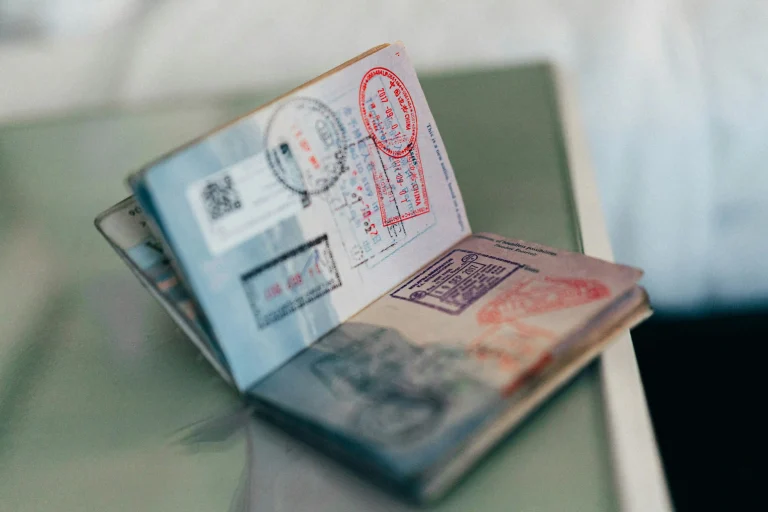
Passport Document Stamp

Documents required for a Turkey Work Visa

Based on the standard work visa procedure for Turkey, prepare:

The signed visa application form with your photo
Your original passport
Biometric photos
The employment agreement from the Turkish company
Your original police clearance certificate (mandatory)
Copies of your passport
A power of attorney, if an agent applies on your behalf

Turkey Work Visa Price in Pakistan (2026)

The Turkish Embassy in Islamabad published its 2026 visa fees in Pakistani rupees on February 20, 2026. Anatolia Travel Services adds its service charge.

Turkey Work Visa fees in Pakistan 2026 
DocumentWho appliesWhat it allows
Work visa fee Turkish Embassy Islamabad, 2026 fee list (20 Feb 2026)
Anatolia Travel Services service charge Anatolia Travel Services

Turkey Work Visa Processing Time

According to Turkiye’s published work visa procedures, the entire process takes about a month or more. The clock depends on three things: how quickly your employer submits the application to the ministry, how long it takes for the ministry to review it, and whether your documents are complete. The most common delays are due to missing documents, a slow employer, or a correction request that means renewing the application.

How to check Turkey Work Visa Status

According to Turkiye’s published work visa procedures, the entire process takes about a month or more. The clock depends on three things: how quickly your employer submits the application to the ministry, how long it takes for the ministry to review it, and whether your documents are complete. The most common delays are due to missing documents, a slow employer, or a correction request that means renewing the application.

Jobs & Salaries in Turkey for Pakistani Workers

Turkey mainly hires foreign workers in construction, manufacturing (including textiles), hospitality and food processing. Recent IMC demands for Turkey include welders, CNC operators and butchers, and you can see current openings on our Turkey jobs page.

On salary, Turkey’s net minimum wage for 2026 is 28,075 Turkish lira per month, effective January 1, 2026 (Hürriyet Daily News). Skilled and experienced workers are often paid more, but your real salary is what is in your employment contract and foreign service contract. Read both before signing, and don’t just rely on salary promises made over the phone or WhatsApp.

Beware of “Free Work Visa” and Fake Offers

There is no legitimate “free” Turkish work visa. A visit visa cannot be converted into a work permit, and no one can guarantee you a visa, as the Ministry and the Turkish Mission decide. Turkish visa applications in Pakistan go through Anatolia Travel Services only, so anyone claiming to “contact the embassy directly” is misleading you. Before paying any agency, check its BEOE license and ask for a receipt. Our guide on how to choose the right recruitment agency explains what to check.

Frequently Asked Questions

Can I apply for a Turkey work visa without a job offer?

No. A Turkish work visa requires a job offer from a Turkish employer who applies for your work permit to the Ministry of Labor and Social Security. Without an employer and permit application, there is no work visa to apply for.

The 2026 Fee List of the Turkish Embassy Islamabad published on February 20, 2026, sets the official work visa fee in Pakistani Rupees and Anatolia Travel Services adds a service charge.

About a month or more. Your employer must initiate a work permit application within 10 business days of receiving your reference number, and the Ministry will then review it. Missing documents, a slow employer, or a correction request can add time, as the correct application must be renewed.

No, a visit visa or e-visa is for tourism and short trips only, and cannot be converted into a work permit. The legal route is a work permit applied for by a Turkish employer and a work visa issued by Anatolia Travel Services before your trip.

02Nov

How to Choose the Right
Recruitment Agency for Overseas Hiring

Choose the right recruitment agency based on these five things: experience and reputation in your industry, a track record you can check, clear fees, legal and transparent processes, and good communication. When you hire from another country, add a sixth: the agency should be licensed in the workers’ country and follow fair recruitment laws. This guide is for employers and HR teams hiring locally or from abroad. It includes checks to run, questions to ask, additional steps for cross-border hiring, and warning signs that tell you to walk away.

How a recruitment agency works and its types

A recruitment agency finds, screens, and presents candidates for your positions, so your team spends their time on final interviews instead of sifting through applications. Most agencies also handle reference checks and submit paperwork, and some manage the hiring process for you.

Agencies are not all the same. The main types are:

  • General agencies fill a wide range of roles across industries.
  • Specialist or sector agencies focus on one sector, such as construction, healthcare or IT.
  • Executive Search firms recruit senior leaders, usually on a retained basis.
  • Temporary and Contract staffing agencies Overseas or international recruitment agencies recruit workers in one country for employers in another, and handle the legal and travel steps in between.
  • Overseas or international recruitment agencies recruit workers in one country for employers in another, and handle the legal and travel steps in between.

7 checks before choosing the right recruitment agency

Run these checks on every recruiter or recruiting agency you are considering. Each one ends with a question to ask before you sign.

Hand_shaking

1. Define your need first

An agency can only do what you describe. Before contacting anyone, write down the roles, number of people, skill levels and experience, your timeline, and your budget. Note that any certifications or licenses are a must. A clear brief makes it easier to compare agencies, as you can see who responds to your actual needs and who sends a generic pitch.

2. Industry and role experience

An agency that has filled your right roles before will know where to find the right people and how to vet them. A welder, a staff nurse and a site engineer require very different sourcing and screening. Find an agency that regularly recruits in your sector, not one that lists every industry on its website.

3. Check the track record

Ask for references from current clients that you can call, and look for repeat business, which shows that employers have returned. Ask how long their staff typically stay, and how they handle placements that don’t work out. A good agency will give you contacts without hesitation.

4. How they find and screen candidates

Ask where candidates come from and how they are screened. Good screening includes interviews, practical trade or technical skills tests, and documentation and experience checks. For example, see how an agency conducts candidate screening and trade testing. Weak screening means you are doing the filtering yourself, which defeats the purpose of using an agency.

5. Fee and contract terms

Agencies charge in different ways. A contingency agency is paid only when you rent. A retention agency is paid partially upfront to conduct a dedicated search. Some charge a set amount per rental. Check what is included in the fee, what costs are extra, and what happens if a rental leaves early, such as a free replacement within a set period. Get every term in the written contract.

6. License and legal compliance

Check that the agency has any licenses where it operates. For employment abroad, this is doubly important: the agency must be licensed in the workers’ country, not just be able to talk about it. The next section explains how to check this.

7. Communication and reporting

You should know who your contact person is, how often you will receive updates, and how quickly shortlists arrive. Slow or unclear communication during the sales phase rarely improves after you sign off. Agree on a reporting rhythm at the beginning, for example a weekly update until the roles are filled.

Before signing, questions to ask a recruitment agency

Questions to ask a recruitment agency, and what a good answer looks like
QuestionWhat a good answer looks like
Which of our roles have you filled before?Specific recent examples in your sector
Can we speak to two current clients?Names and contacts, offered without hesitation
How do you screen candidates?Interviews, practical tests and document checks, explained step by step
What does your fee include?A written breakdown with no hidden extras
What happens if a hire leaves early?Clear replacement terms in the contract
What is your licence number?A number you can verify on an official government list
How will our overseas demand be approved?A clear account of attestation and government permission
What do workers pay?A written answer consistent with fair-recruitment principles
Which pre-departure steps do you handle?A full list: testing, medical, visa, registration, travel
Who supports workers after arrival?A named contact and a clear process

Frequently Asked Questions

How do I choose the right recruitment agency?

Start with a clear brief of your roles, numbers, and timeline. Then compare agencies on industry experience, a track record you can check, their screening process, clear fees, licensing, and communication. For overseas employment, also verify that the agency is licensed in the workers country and follows fair recruitment laws.

Look for licensing in the workers’ country, a clear process for approving your request, written feedback on worker payments, pre-departure steps such as testing, proper handling of medical and visas, and post-arrival support. Recruitment experience for your sector and country also matters.

Find it in the list of licensed promoters on the Bureau of Immigration and Overseas Employment website beoe.gov.pk. Check that the name and address match the details given to you by the agency.

16Oct

Most In-Demand Jobs in Saudi Arabia for 2026

 From January to September 2026, the 60 percent of all overseas job registrations from Pakistan, according to Bureau of Emigration and Overseas Employment (BEOE) data. So which are the most in-demand jobs in Saudi Arabia, and which pay more? This guide uses official BEOE numbers, to show where Saudi jobs really are for Pakistani workers. It also covers jobs for women, how to check “company job” offers, and how to apply through official channels.

Where are Pakistani workers going in Saudi Arabia: the BEOE numbers

From January to September 2026, 258,178 Pakistanis registered for employment in Saudi Arabia out of 427,435 overseas registrations in total. The UAE was  second with 52,032, followed by Qatar with 35,917. Registrations in 2026 are running below the 2025 pace, but Saudi Arabia is still the top destination for Pakistani workers.

Below, the table shows the main job categories of Pakistanis registered for abroad in January to May 2026. These are all-destination figures, but Saudi Arabia accounts for more than 60 percent of them, so they are a close guide to Saudi demand.

Overseas employment registrations by job category, January to May 2026 (BEOE)
Job categoryRegistrations
Labourers171,206
Drivers52,652
Cooks9,824
Technicians3,794
Fitters2,404
Engineers2,341
Accountants1,874
Operators1,849
Electricians1,426
Carpenters1,404
Doctors1,284
Welders1,189
Teachers833
Agriculturists643
Computer analysts630
Plumbers595
Nurses487

Labourers and drivers make up about four out of five registrations. Cooks are the third largest group, followed by skilled trades such as technicians, fitters, electricians and carpenters. Professionals (engineers, accountants, doctors, teachers, nurses) are a smaller group, but they are generally paid more.

Saudi Arabia’s Vision 2030 programme and giga-projects such as NEOM, the Red Sea Project and Qadiya require large numbers of workers in construction, transportation, services and operations, and many of these jobs are filled by immigrants.

Truck Driver

Most in-Demand jobs in Saudi Arabia in 2026

Here are the main job areas for Pakistanis, in the order the BEOE data suggests, with what each one usually needs.

01  Driver Jobs

Who it suits: experienced light vehicle, heavy truck and bus drivers & house drivers (home drivers) for families.

What usually needs: a valid Pakistani driving licence for the right vehicle, proven driving experience, and a driving test after arrival to get a Saudi licence.

02  Labour & Construction jobs

Who it suits:general labourers, packing helpers, cleaners, and tradesmen such as masons, carpenters, steel fixers, plumbers, painters and welders

What usually needs: general labor and packing jobs often don’t require any formal qualifications. Skilled trades require experience, and many require a passing skill test.

03  Electrical, AC and HVAC technician jobs

Who it suits: electricians, AC and HVAC technicians, MEP technicians, CCTV technicians and forklift operators.

What usually needs: a diploma or trade certificate, hands-on experience, and a Takamol SVP test for the listed trade. Electrical jobs are among the most common technical roles.

04  Safety officer & HSE jobs

Who it suits: safety officers, HSE supervisors and fire watchers on construction, oil and gas, and industrial sites.

What usually needs: A recognised safety qualification such as NEBOSH or OSHA, site experience, and verified educational documents for senior roles.

05  Engineering Jobs

Who it suits: civil, electrical and mechanical engineers, plus site and maintenance engineers.

What usually needs: an HEC certified engineering degree, the Ministry of Foreign Affairs and the Saudi Embassy, ​​and after employment professional accreditation with the Saudi Council of Engineers.

06  Saudi Nursing & Healtcare Jobs

Who it suits: nurses, nursing assistants, medical lab technicians, pharmacists, physiotherapists and doctors.

What usually needs: a recognized degree or diploma, current registration in Pakistan, and classification with the Saudi Commission for Health Specialties (SCFHS).

07  Technical Jobs

Who it suits: Teachers, English teachers, and university lecturers with postgraduate degrees.

What usually needs: a certified degree, teaching experience, and often teaching qualifications such as a B.Ed for teaching English or a TEFL certificate. University jobs usually ask for a master’s or Ph.D.

08  IT & Accountant Jobs

Who it suits: IT support staff, network and software professionals, data analysts, computer operators, document controllers, and accountants.

What usually needs: an attested degree or professional qualification, relevant experience, and good written English.

09  Hotel & Resturant Jobs

Who it suits:chefs, cooks, waiters, housekeeping staff and front office staff. Cooks were the third-largest job category in BEOE registrations for January to May 2026.

What usually needs: experience in hotels or restaurants, basic English, and for chefs a food production record or a practical cooking test.

10  Agriculture Jobs

Who it suits: farm workers, livestock and dairy workers, and food production staff.

What usually needs: practical farm or dairy experience. Formal education is rarely required.

Highest paying jobs in Saudi Arabia

The highest-paying jobs in Saudi Arabia for Pakistanis are generally professional and specialist roles: engineers, doctors, specialist nurses, and senior IT and finance staff. These roles pay more than general labor because they require degrees, licensing, and experience that few applicants possess.

Jobs in Saudi Arabia for females

There is real demand for women in several areas. The main ones are:

Healthcare: nursing especially, lab, pharmacy and physiotherapy roles.

Hospitality and office roles: some hotel, administration and support jobs.

Technical & Education:  schools, colleges and universities.

Where to find geninue Saudi jobs from Pakistan

More Pakistanis are now looking for government routes, and that’s the right instinct. If you want to apply online for Saudi Arabia jobs for Pakistani workers, start here:


01

BEOE foreign jobs listings:

the BEOE publishes approved overseas demands with the job title and salary.


02

OEC:

The Overseas Employment Corporation is the government’s own recruitment company and advertises overseas jobs directly.


03

Licensed OEPs:

Check any agency’s licence on the BEOE list before you pay anything. Iqbal Manpower recruits for jobs in Saudi Arabia for Pakistani workers under BEOE Licence 0658/RWP.


04

Jobs Portals:

Sites such as Rozee, Bayt and LinkedIn are useful for finding openings, but the visa, medical and Protector process still goes through official channels.

Frequently Asked Questions

Which jobs are most in demand in Saudi Arabia for Pakistanis?

BEOE data for January to May 2026 shows the highest demand for labourers and drivers, followed by cooks, technicians, fitters and other trades. Professionals such as engineers, accountants, doctors and teachers are a smaller group. Saudi Arabia took about 60 percent of Pakistan’s overseas job registrations from January to September 2026.

Professional and specialist roles usually pay the most: engineers, doctors, specialist nurses, and senior IT and finance staff. Pay depends on the employer, experience and contract, so check the salary in the BEOE job listing and your Foreign Service Agreement rather than online salary tables.

The main areas are healthcare, teaching and education, and some hospitality and office roles. Apply only through a licensed agency or official channel.

Check the BEOE foreign jobs listings and the OEC website for approved demands, or apply through a BEOE-licensed agency.

02Oct

Kuwait Work Visa for Pakistani Workers: 2026 Guide

Kuwait has resumed issuing work visas for Pakistani workers from 2025. It lifted a long-standing ban last year and now Kuwaiti work visas for Pakistani workers are processed through the normal employer sponsored process. This guide explains whether work visas are open in 2026, how the process works step by step, what documents are required, what it costs, and how long it takes.

Is the Kuwait work visa open for Pakistani workers in 2026?

Yes, the Kuwait work visa for Pakistani workers is open. Kuwait stopped issuing most visas to Pakistani citizens in 2011, citing security conditions. This changed in May 2025, when Kuwait lifted the ban and resumed work, family, business, visit, and tourist visas. The Pakistani government confirmed the decision on its official account, and the Ministry of Overseas Pakistanis and Human Resource Development announced in August 2025 that it would resume sending skilled workers to Kuwait.

DateWhat Changed
2011Kuwait has stopped issuing most visas to Pakistani citizens.
May 2025Kuwait lifts ban, resumes work, family, business, visit, and tourist visas
August 2025Pakistan’s Overseas Employment Corporation resumes sending skilled workers
September 2025Commercial visit visas for Pakistani citizens have resumed.

Types of Kuwait work visa

Kuwait classifies residence visas by article number. Article 18 is important for most Pakistani workers.

Article Who it is for Sponsor
Article 18 Private sector workers (the main route for Pakistani workers) Private company
Article 17 Government sector employees Government entity
Article 20 Domestic workers Household employer
Article 22 Dependents joining a family member Family sponsor

Kuwait work visa process for Pakistani workers, step by step

The process starts with the employer in Kuwait, not the worker. You cannot apply for a Kuwaiti work permit yourself. Here is the complete process:


01

Job offer and contract.

A registered employer in Kuwait offers you a role and a written contract.


02

Work permit through PAM.

The employer applies for your Kuwait work permit through the Public Authority for Manpower (PAM), using its Ashal e-portal.


03

Entry visa from the MOI.

Once the permit is approved, the Kuwaiti Ministry of Interior (MOI) issues a work entry visa, and the approval documents are sent to you in Pakistan.u


04

Pakistan-side steps.

You complete the GAMCA / Wafid medical for Kuwait at an approved centre, obtain a police character certificate, complete document attestation for Kuwait where the role needs it, and have the visa stamped through the Kuwait Embassy in Islamabad or the Consulate in Karachi.


05

Protector registration.

Before departure, you complete Protector of Emigrants registration with the BEOE and receive your Overseas Employment Certificate (OEC).


06

Travel.

You fly to Kuwait on the work entry visa. See our flights to Kuwait service.

07

After arrival.

You complete a medical re-check and fingerprinting, your residency (iqama) is stamped, reported as within 60 days of arrival, and the Public Authority for Civil Information (PACI) issues your Civil ID.

A licensed recruitment agency manages the Pakistan side of this chain for you. If you want that handled end to end, see our work visa services.

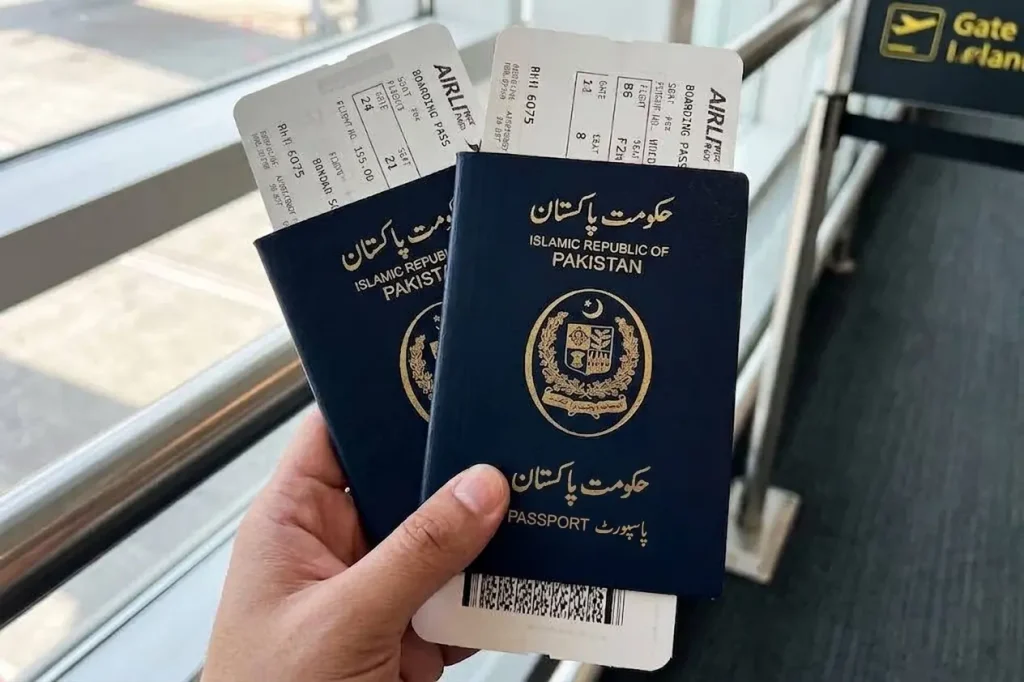
Man holding Pakistani Passport

Documents required for kuwait work visa

The documentation process is divided into two groups: what you need in Pakistan before visa stamping, and what happens after you arrive.

Before visa stamping in Pakistan

✓

Passport

✓

CNIC

✓

Recent passport-size photographs

✓

Signed job offer letter and employment contract

✓

Work permit and entry visa approval from Kuwait

✓

GAMCA / Wafid medical fitness report

✓

Police character certificate (PCC)

✓

Attested educational or trade certificates

✓

Protector of Emigrants registration and OEC before departure

After Arrival in Kuwait

✓

Medical recheck & fingerprinting

✓

Iqama Stamping

✓

Civil ID from PACI

✓

Health Insurance , now mandatory for residents.

Kuwait work visa price in Pakistan

“Kuwait visa cost” is one of the most searched questions about Kuwait, and the answers online vary. The honest answer is that there is no single price, as the Kuwait visa fee is split between the employer and the worker, and between Kuwait and Pakistan.

Cost itemWho usually paysNotes
Kuwait work permit feeEmployerGovernment fee in Kuwait.
Residency (iqama) and Civil IDEmployerUnder the Kafala system, it is paid upon arrival.
Health insuranceSet by Kuwaiti rulesMandatory for residents
GAMCA / Wafid medicalWorkerPaid at the approved centre in Pakistan
Protector registration and OECWorkerPakistan government fees, officially receipted
Police certificate and attestationWorkerOnly the documents your role requires

The Kuwait work permit fee itself has been reported inconsistently during 2025 and 2026, and changes to residency and fee laws came into effect in December 2025. We do not publish figures until this is confirmed.

Why do online Kuwait visa prices seem so high? Many of the “package” prices advertised on social media include the cost of purchasing a visa from a sponsor, which is illegal in Kuwait. In true private sector employment, the employer pays the government costs on behalf of Kuwait. If someone quotes you a large amount “for a visa,” ask what it covers and who the employer is.

Kuwait work visa processing time

Timelines depend on the employer, the role and how quickly your documents are ready. As a general range:

These are typical ranges, not promises. Your agency should give you a timeline for your specific file.

Kuwait work visa vs visit visa: can you work on a visit visa?

No, many people search for the cost of a Kuwaiti visit visa in the hope of traveling first and finding a job later. The Kuwaiti Ministry of Interior says that visit visa holders are prohibited from working. A worker who obtains employment while on a visit visa must leave Kuwait and re-enter on an employer-sponsored work entry visa.

Rules to know after you arrive in Kuwait

Kuwait has changed some of its rules for foreign workers in 2025 and 2026. As of September 2026:

Exit permit: since 1 July 2025, Article 18 workers need an employer-approved exit permit before leaving Kuwait, for any reason.

Health Insurance: it is mandory for residents under the rules which has been in effect since December 2025 

Residency & Civil ID: residency is stamped after arrival, then the Civil ID is issued by PACI.

Changing employer: transfers are allowed after three years with the same employer. Earlier transfers are reported to carry a fee.

Your Passport: It belongs to you, and your employer should not keep it.

Frequently Asked Questions

Is Kuwait work visa open for Pakistani in 2026?

Yes, Kuwait lifted the visa ban for Pakistani worker in May 2025. And now it has resumed issuing work visas. Pakistan’s Overseas Employment Corporation has resumed sending skilled workers in August 2025. There is no information from any reliable source about the ban as of September 2026.

There is no specific price for this. In private sector employment, the Kuwaiti employer usually pays for the worker’s work permit and residency expenses. Whereas in Pakistan, the worker has to bear the expenses for things like medical, protector registration, police certificate, and any attestation himself.

No, the worker has to apply through a reputable manpower sourcing agency. If approved, the worker completes the medical, visa stamping, and Protector registration in Pakistan through a licensed agency.

A valid passport, CNIC, photographs, signed job offer and contract, a GAMCA/Wafid medical report, a police character certificate, attested educational or trade certificates where the character requires them, and a proof of refugee registration before departure.

The applicant must be at least 18 years of age at the time of application. In addition, the age limit depends on the job and the employer’s requirements, so it varies from role to role.

The Kuwaiti work permit process usually takes 4 to 8 weeks, with additional processing time due to medical , visa stamping and Protector registration. These periods should not be considered final, but are typical ranges.

No, Kuwait’s Ministry of Interior has not allowed workers on visit visas to work. Such individuals who are looking for work must leave Kuwait and re-enter on an employer-sponsored work entry visa.

No, a free visa is a visa purchased from a sponsor with no real work behind it, and visa trading is illegal in Kuwait. Workers who use one risk fines, detention, and deportation. A real work visa is linked to a real employer and contract.

24Sep

Malaysia Work Visa for Pakistani Workers

Malaysia is open to Pakistani workers in 2026. Pakistan is one of the 15 approved source countries and recruitment is done through approved employers and licensed agency. Iqbal Manpower Consultants is one of the 10 Pakistani Principal Recruitment Agencies on Malaysia’s FWCMS. Visit our FWCMS Listed Recruitment Agency for Malaysia page. This guide explains who is eligible for visas from Pakistan, available jobs, the actual costs and the step-by-step process from Pakistan using government facts. Here is a timeline of the key points as Malaysia’s laws change in 2026.

Is Malaysia open to Pakistani workers right now?

Yes, Malaysia continues to recruit foreign workers, and Pakistan is on the list of approved source countries. Two current facts are important:

✓

Quota applications are now running through the FWCMS eQuota module managed by the Malaysian Ministry of Human Resources (KESUMA) from 6 July 2026. The previous special quota window, which was first set for 19 January to 31 March 2026, has had its deadline removed, so it now operates under an open policy.

✓

Direct recruitment from abroad is not allowed. Recruitment must be through a licensed agency, which is why both the Malaysian employer and a BEOE licensed Pakistani agency sit in a legal chain.

A note of realism, Approvals are not automatic. They remain subject to sector caps, labor market requirements, and employer compliance records. Some sectors have been restricted since the 2023 freeze. The open sectors are manufacturing, construction, plantations, agriculture, and mining and quarrying, with services limited to designated activities such as restaurants, cleaning, cargo handling, security, retail, and hospitality.

Man holding Pakistani Passport

Who is eligible?

For the main job, VP(TE), the basic eligibility is:
✓

Age: 18 to 45 years at the time of application.

✓

Approved sector: the job must fall within manufacturing, construction, agriculture, plantation, or services.

✓

Medical fitness: a FOMEMA medical after arrival, within 30 days.

✓

Source-country clearance: the Pakistan-side registration and documents handled by a licensed recruitment agency.

On common questions: Eligibility is not dependent on being a fresher or graduate, it depends on the sector and employer requirements. The availability of female workers varies by sector, as some sectors impose gender restrictions under Malaysian policy. Students on study visas are a separate category and are not included in the work pass route described here.

Malaysia work visa types explained

There are three main routes in Malaysia, and it is important to give the right names:

VP(TE) / PLKS / ePLKS

The Visitor’s Pass (Temporary Employment). This is the pass for semi-skilled and unskilled workers in the approved sectors, and it is the one most IMC candidates use. It is valid for 12 months, renewable annually up to a total of 10 years.

Emloyment Pass (EP)

For skilled and professional roles, linked to a salary range (usually RM5,000 or more) and issued for one to five years.

Professional Visit Pass (PVP)

A short-term pass where the worker remains employed by their overseas or Pakistani company while working in Malaysia.

Jobs in Malaysia for Pakistanis, by sector

The roles open to Pakistani workers follow the approved sectors. This table outlines it:

Sector Example roles
Manufacturing Factory and production operators, packers, machine operators
Construction Masons, steel fixers, general and skilled site workers
Plantation & agriculture Field and harvesting workers
Services (named activities) Restaurant staff, cleaners, security guards, retail and hospitality staff, cargo handling

Which roles are actually hiring depends on live employer quotas at any given time. You can see the openings we are currently recruiting for on our jobs page.

Requirements & Documents

To process a Malaysian work visa from Pakistan, you will generally need to:

✓

A passport valid for the required period

✓

Attested educational or trade documents, where the role requires them

✓

Protector of Emigrants clearance on the Pakistan side

✓

A job offer from an approved Malaysian employer

✓

A pre-departure medical, and the FOMEMA medical after arrival

How to apply for Malaysia work visa from Pakistan, step by step

The process follows a fixed order, and the employer starts it, not the worker:

1

Job offer

An approved Malaysian employer offers you a role. You cannot apply independently, because the employer sponsors the visa and holds the quota.

2

Quota and approval

The employer secures its quota through the FWCMS eQuota system, then the Immigration Department issues a Visa With Reference (VDR) approval.

3

Pre-departure medical

You complete the medical in Pakistan.

4

Visa and protector clearance

You obtain the Single Entry Visa from the High Commission of Malaysia in Islamabad, and complete your Protector of Emigrants registration, the mandatory Pakistan-side legal step handled by a licensed agency.

5

Travel and FOMEMA

You fly to Malaysia and, within 30 days of arrival, complete the FOMEMA medical. Once cleared, your VP(TE) work pass is endorsed.

One point of clarification, Malaysia uses FOMEMA medical, not the Gulf GAMCA or Wafid system. If you are also considering the Gulf, the medical measures are different for each destination.

Fee , Levy & Cost 

Malaysian work-visa costs split into government charges and other costs, and it helps to see them separately.

The largest recurring government cost is the annual foreign worker levy, which is set by sector and region. In Peninsular Malaysia, it is RM1,850 per year for manufacturing, construction and services and RM640 for plantations and agriculture (Source: Malaysian Ministry of Home Affairs and Immigration Department). In addition to the smaller fixed government fees, a VP(TE) fee and a processing fee, there is also a nationality-specific visa charge.

Calculator and receipts representing the breakdown of Malaysia work visa levy

A licensed agency’s own service charge is a separate matter, always regulated and receipted.

Frequently Asked Questions

Is the Malaysia work visa open for Pakistani workers in 2026?

Yes, Malaysia is open to foreign workers as of September 2026 and Pakistan is one of about 15 approved source countries. Quota applications are handled through the FWCMS eQuota system, and the previous special window closing date has been removed, so applications are open, subject to policy and sector caps.

No. Working without work visa is illegal and carries serious penalties. You cannot apply independently, and you cannot work on a visit or tourist visa.

18 to 45 years for the VP(TE) at the time of application, the work pass used by general foreign workers in Malaysia’s approved sectors. Skilled Worker Employment Pass has different criteria based on salary and qualifications.

The main recurring government cost is the annual levy, RM1,850 for manufacturing, construction, and services, or RM640 for plantations and agriculture, plus a small VP(TE) and processing fee. From 2023, the levy is paid by the employer and cannot be deducted from your wages. The licensed agency service charge is separate and is always collected.

Eligibility depends on the sector and the employer’s quota, not on being a fresher. Some sectors and nationalities have gender restrictions set by Malaysian policy, so availability varies. A licensed agency can tell you which current openings match your profile.

24Aug

Most In-Demand Dubai Jobs for Pakistanis 2026

Licensed Overseas Employment Promoter since 1978 BEOE Licence No. 0658/RWP

Most In-Demand Jobs in Dubai for Pakistanis (2026)

The short answer

The most in-demand jobs in Dubai for Pakistani workers in 2026 are in the skilled trades electricians, welders, drivers, HVAC technicians, and safety officers with strong additional demand in healthcare, IT, finance, and construction. For most Pakistani applicants, the skilled trades offer the clearest, most winnable path.

SectorExample rolesTypical salary (AED/month)Approx. PKR/monthVisa type
Skilled tradesElectrician, welder, HVAC technician1,800–4,000136,000–302,000Company employment visa
DriversLight driver, heavy driver2,000–3,500151,000–265,000Company employment visa
Safety & supervisionSafety officer, site supervisor3,000–6,000227,000–454,000Company employment visa
Semi-skilledSecurity guard, helper, receptionist1,200–2,50091,000–189,000Company employment visa
ProfessionalIT, healthcare, finance, engineering8,000–25,000+605,000–1,890,000+Company employment visa

Swipe the table sideways to see every column →

PKR figures are approximate, using an AED→PKR rate of about 75.6, as of August 2026. The rate moves convert again before you decide anything.

Most guides about Dubai jobs are written for software engineers and analysts. This one is written for the Pakistani electrician, welder, driver, and safety officer the workers Iqbal Manpower Consultants has deployed to the Gulf since 1978, under BEOE Licence No. 0658/RWP.

What are the most in-demand jobs in Dubai for Pakistanis in 2026?

For Pakistani workers, the strongest realistic demand in Dubai is in the skilled trades: electricians, welders, HVAC and MEP technicians, drivers, and safety officers. Professional roles in healthcare, IT, and finance are also in demand for those who qualify. The trades are where most Pakistani applicants have the best chance of being selected.

Dubai's construction, logistics, and facilities sectors run on imported labour, and Pakistani tradesmen are among the most sought-after for these roles. One fact worth remembering: Dubai charges no personal income tax, so the salary you are offered is close to what you actually take home.

Skilled and technical trade jobs in demand

This is where Pakistani workers compete best, so it comes first. These trades have steady demand, less competition than office roles, and they are exactly what a licensed recruiter places. Each role below carries a realistic monthly salary in both currencies.

Drivers (light and heavy)

AED 2,000–3,500

Drivers are among the most consistently recruited workers from Pakistan light-vehicle, delivery, and heavy-vehicle (bus, trailer, truck) drivers across logistics, delivery, and construction.

  • Typical salary: AED 2,000–3,500 (about PKR 151,000–265,000), often with accommodation and transport provided.
  • What employers want: a valid UAE licence (or the ability to convert your Pakistani one), a clean record, and category experience for heavy roles.

Electricians, HVAC and MEP technicians

AED 1,800–4,000

Electrical and MEP (mechanical, electrical, plumbing) work drives Dubai's construction and facilities-maintenance sectors. These are among the most stable trades for Pakistani workers.

  • Typical salary: AED 1,800–4,000 (about PKR 136,000–302,000), rising with certification and experience.
  • What employers want: a relevant trade certificate, hands-on experience, and often a NAVTTC or equivalent skill test.

Welders and fabricators

AED 1,800–3,500

Welders are in steady demand in construction, oil and gas, and fabrication. Certified welders for example 6G earn at the top of the range.

  • Typical salary: AED 1,800–3,500 (about PKR 136,000–265,000); certified specialists earn more.
  • What employers want: a welding certificate, a passed practical test, and experience with the required process.

Safety officers and site supervisors

AED 3,000–6,000

Dubai's strict site-safety rules keep demand high for qualified safety officers. This is one of the better-paid trade-adjacent roles and a strong target for experienced workers.

  • Typical salary: AED 3,000–6,000 (about PKR 227,000–454,000).
  • What employers want: a recognised safety qualification such as NEBOSH or IOSH, and site experience.

Mechanics and heavy-equipment operators

AED 2,000–4,500

Vehicle mechanics, diesel mechanics, and operators of cranes, forklifts, and heavy equipment are needed across transport and construction.

  • Typical salary: AED 2,000–4,500 (about PKR 151,000–340,000).
  • What employers want: relevant experience, and for operators, a valid operating certificate.

Professional and office jobs in demand

For qualified professionals, Dubai has strong demand across several sectors though competition here is global, and these roles usually require degrees, licensing, or specialised experience.

  • Healthcare: nurses, technicians, and allied health staff, subject to DHA/MOH licensing.
  • Information technology: software developers, cybersecurity, and support roles, supported by Dubai's D33 economic agenda.
  • Finance and accounting: accountants, auditors, and banking staff.
  • Engineering and project management: civil, mechanical, and electrical engineers for the construction pipeline.

According to the Robert Walters UAE Salary Survey and the PwC AI Jobs Barometer, demand for technology and specialised professional skills across the UAE continues to grow. These roles commonly pay from AED 8,000 to AED 25,000 or more per month (about PKR 605,000–1,890,000+), depending on qualification and experience.

Semi-skilled and entry-level jobs

These roles show rising search demand and are a genuine entry point, though they pay less and competition for them is high.

  • Security guards: AED 1,500–2,500 (about PKR 113,000–189,000); often needs a SIRA certificate arranged after arrival.
  • Helpers and cleaners: AED 1,000–1,200 (about PKR 76,000–91,000), usually with accommodation.
  • Receptionists and office assistants: AED 2,000–3,500 (about PKR 151,000–265,000) for roles requiring English and computer skills.

How much do these jobs pay? (AED and PKR)

Salaries in Dubai are quoted in dirhams (AED), and because there is no personal income tax, the figure you are offered is close to your take-home pay. Many blue-collar contracts also include accommodation and transport, which raises the real value of a lower cash salary.

The table at the top gives the ranges by sector. Two things to keep in mind when converting to rupees:

  • The rate moves. These figures use about PKR 75.6 to 1 AED (August 2026). Check the live rate before deciding.
  • Ask what is included. AED 2,000 with free accommodation, transport, and food can be worth more than AED 2,800 without them. Always ask what the contract covers.

What visa do you need to work in Dubai?

To work legally in Dubai, you need a employment visa sponsored by UAE employer, leading to an Emirates ID and a work permit through the UAE Ministry of Human Resources and Emiratisation (MoHRE). Your employer initiates it; a licensed recruiter in Pakistan manages your side, including your Protector of Emigrants clearance.

You cannot legally work in Dubai on a visit or tourist visa. Any agent who tells you to travel on a visit visa and "find work there" is pointing you toward the same trap as the free visa.

How to apply for a Dubai job from Pakistan

The safe path is short, and worth following exactly:

  1. Apply only through a BEOE-licensed recruiter. Verify the licence on beoe.gov.pk before you pay anything.
  2. Prepare your documents passport, CV, trade certificates, and experience letters.
  3. Apply for a role that matches your trade. See current openings on our jobs page.
  4. Complete any trade test and medical the employer requires.
  5. Never pay into a personal account, and never accept a "free visa" offer.

You can start with our current Dubai and UAE openings, read how we are licensed on our Legal Status page, or contact our team directly.

Frequently Asked Questions

What is the most in-demand job in Dubai for Pakistanis?

Skilled trades are the most in-demand and most realistic roles for Pakistani workers especially electricians, welders, HVAC technicians, drivers, and safety officers. They have steady demand and less competition than professional office roles.

How much can a Pakistani earn in Dubai (in PKR)?

It depends on the role. A driver earns roughly AED 2,000–3,500 a month (about PKR 151,000–265,000), a skilled tradesman AED 1,800–4,000 (about PKR 136,000–302,000), and a safety officer AED 3,000–6,000 (about PKR 227,000–454,000). These use an August 2026 rate of about PKR 75.6 per AED check the live rate before deciding.

What is a free visa for Dubai — is it safe?

A "free visa" means you are not tied to an employer and must find your own work after arriving, carrying all the cost and legal risk yourself. It is not safe. A company employment visa, tied to a named employer with a contract, is the safe and legal route.

How can I apply for a Dubai job from Pakistan?

Apply through a BEOE-licensed recruiter, verify the licence on beoe.gov.pk, prepare your documents, and apply for a role matching your trade. Never pay into a personal account, and never accept a free-visa offer.

Find genuine Dubai work the safe way

The Pakistani workers who build a good life in Dubai are the ones who went on a real company visa, through a licensed agency, with a contract they could verify. Iqbal Manpower Consultants has deployed skilled workers to the Gulf since 1978 check our licence, 0658/RWP, on the BEOE website, then see the Dubai roles we are recruiting for now. Browse current openings or contact us to begin.

Iqbal Manpower Consultants · Licensed Overseas Employment Promoter since 1978 · BEOE Licence No. 0658/RWP

23Jul

Best Work Visa Consultants in Pakistan

Seeking a Top Work Visa Consultant in Pakistan

Suppose you’re a Pakistani national with your sights set on international employment or a foreign company aiming to recruit skilled Pakistani workers. In that case, the intricacies of work visa applications can feel overwhelming. This is where the best work visa consultants in Pakistan can lend a helping hand – but how do you pinpoint the most capable one in Pakistan?

The Challenge: Deciphering Work Visa Processes

Work visa applications are infamous for their extensive documentation, stringent regulations, and detailed procedures. Without expert advice, it’s simple to become entangled in the process, potentially resulting in setbacks, refusals, or even legal complications. Finding the right work visa consultant in Pakistan is crucial, and that’s where Iqbal Manpower Consultant (IMC) comes in. With a solid 48 years in the recruitment business, IMC has earned its stripes as a name you can trust, whether you’re an employer or looking for a job.

IMC is your all-in-one solution, making the visa application process a breeze with services like:

  1. Recruitment: We match employers with top-notch candidates, ensuring a smooth hiring experience.
  2. Work Visa Service: Our pros take care of the nitty-gritty of work visa applications, from paperwork to filing.
  3. Document Attestation: Count on us for dependable attestation of your academic and professional documents.

Why pick IMC?

You might be wondering what makes IMC different from other work visa consultants in Pakistan. Well, here are a few things that set us apart:

  1. ISO Certified: We’re an ISO-certified recruiting agency, meaning we follow all the rules, both locally and internationally.
  2. Top-Notch Candidates: We have a huge network and a massive database of potential employees, so we can quickly find the best people for the job.
  3. Quick Placement: We’re authorized by the government and work closely with all the key players to get people to their jobs fast.
  4. Honest & Clear Pricing: We promise fair prices and to do things the right way in everything we do.

Why Partner with IMC for Your Work Visa Needs

Opting for IMC as your work visa consultant brings a wealth of advantages, such as:

A Simplified Application Journey: Our seasoned professionals take care of every step in the work visa application, sparing you time and effort.

Higher Chances of Approval: Thanks to our deep experience and familiarity with regulations, we boost your odds of a successful work visa application.

Total Confidence: When you work with IMC, you can be completely confident that your work visa application is being handled expertly.

Conclusion

Finding a good work visa consultant in Pakistan isn’t always easy. Here at IMC, we aim to be your single point of contact for every work visa requirement. Our wide-ranging experience, ISO certification, and dedication to clear communication and reasonable fees make us the reliable partner you want in your corner.

24Apr

Most In-Demand Skills for Jobs Abroad in 2025

Finding Success Overseas: The Key Skills That Employers Abroad Are Looking For

Thinking about taking your career to the international stage?  These days, there’s a real need for talented workers across the globe, and having the right abilities can set you apart. This blog will dive into what are the most in-demand skills for jobs abroad in 2025, like which specific skills employers in other countries are searching for, giving you the tools to unlock those international career doors.

The Challenge: Making Your Mark in the Worldwide Job Market

It’s getting tougher and tougher to find the right job abroad, as employers are on the hunt for people with very particular abilities. If you don’t have the skills that are in high demand, it can be hard to get noticed among all the other applicants.

What’s Hot Right Now: Skills That Can Take You Global

Here at Iqbal Manpower Consultant (IMC), we’ve done our homework to figure out the most sought-after skills that can help you land a job overseas. We’ve looked at what industries are booming and what employers are really looking for, and here’s a rundown of the skills that can give you a serious edge:

  1. Tech Savvy: As more and more businesses go digital, knowing your way around things like data science, artificial intelligence, and cybersecurity will make you a very attractive candidate.
  2. Linguistic Talent: Being fluent in languages like English, Spanish, Mandarin, or Arabic can unlock a world of career options across the globe.
  3. Technical Skills: In the worldwide job market, skills such as software development, engineering, and IT project management are in very high demand.
  4. Soft Skills: Companies are on the hunt for candidates who have excellent soft skills, including communication, teamwork, and problem-solving abilities.
  5. Healthcare Skills: Due to the increasing global need for healthcare services, skills like nursing, medicine, and healthcare management are extremely sought after.

Here at IMC, we specialize in tailoring recruitment services to both employers and those looking for work. We’re well-versed in a variety of fields, such as engineering, construction, IT, healthcare, and finance. Our services include:

Recruitment: We connect you with the perfect candidates, leveraging our broad network and deep industry knowledge.

Work Visa Assistance: We make the process of obtaining global work visas swift and hassle-free for everyone involved.

Document Attestation: We offer trustworthy attestation services for both academic and professional paperwork.

Job Hunting Pointers

If you’re thinking about taking your career global, here are some pointers to get you going:

Boost and refresh your abilities: Put money into classes and training sessions to sharpen skills that lots of people want.

Make connections and friendships: Go to industry mixers and sign up for career groups to meet potential employers around the globe.

Personalize your resume and cover letter: Adjust your application documents to showcase your skills and experience in the best light.

Conclusion

Opening up career chances around the world means having the correct abilities and know-how. By figuring out the most sought-after skills for international jobs, you can begin your journey to a fulfilling worldwide career. Here at IMC, we’re dedicated to helping you reach your job aspirations. To tap into career opportunities around the world, it’s crucial to possess the necessary skills and knowledge. Knowing what are the most in-demand skills for jobs abroad in 2025 are allows you to make the first move toward a thriving global career. At IMC, we’re dedicated to assisting you in reaching your career objectives.

18Apr

What are the Best Recruitment Sectors in 2025

Figuring Out the Future of Hiring: Which Industries Will Be Hot in 2025

We’re now in 2025, and the world of hiring is changing fast. New technologies are popping up, the makeup of the workforce is shifting, and different industries have new needs. It’s super important to be on top of these changes. In this blog post, we’ll check out What are the Best Recruitment Sectors in 2025, looking at both the good opportunities and the tricky challenges coming our way. We’re seeing some big shifts in the world of hiring these days, and it’s all because of things like:

A Widening Skills Gap:  Businesses are really looking for people who’ve got specific expertise, especially when it comes to newer areas like AI, data science, and cybersecurity. It’s getting harder to find folks who fit the bill.

An Aging Workforce:  With more experienced workers heading into retirement or switching gears, companies are struggling to bring in and keep younger workers around.

A Push for Diversity and Inclusion:  Companies know that having a team with different backgrounds and perspectives is key to attracting and keeping the best people around. It’s not just a nice-to-have anymore; it’s a must-do.

Which Industries Will Be Hot for Hiring in 2025? A Look Ahead

The team at Iqbal Manpower Consultant (IMC) has been diving deep into industry trends, market analysis, and our recruitment know-how to figure out which sectors will be booming for hiring in 2025. Here’s a look at the areas that are worth paying attention to:

  1. All Things Digital and Tech: With companies going full steam ahead on digital makeovers, the hunt is on for top tech talent. Recruitment agencies that can find and place great IT and tech pros are looking at a major upswing.
  2. Healthcare and Medical Services: The healthcare field is expanding like never before, fueled by a growing older population and a need for fresh healthcare ideas. Recruitment agencies that specialize in healthcare placements are going to be incredibly sought after.
  3. Infrastructure Development and Construction: Big infrastructure projects are popping up everywhere, so recruiting agencies that focus on placing engineers and construction workers are going to take off.
  4. Financial Services and Banking: The finance world is changing a lot these days, thanks to new technologies and regulations. That means recruiting agencies that know their way around the finance and banking industries will be in high demand.
  5. Sustainable Energy and Renewable Resources: With everyone becoming more aware of climate change, the renewable energy field is booming. Recruiting agencies that specialize in placing people in renewable energy jobs will do really well in 2025.

Conclusion

The world of hiring is changing a lot these days, thanks to new technologies, different kinds of people entering the workforce, and the changing needs of various industries. Knowing which areas will be hiring the most in 2025 can help both companies looking for employees and people looking for jobs stay ahead. Here at IMC, we’re dedicated to offering personalized recruitment services to help you reach your objectives.

WhatsApp